7 Realities Behind JTeles's 20 Million Cloth Run to Become Rust's #1 Farmer
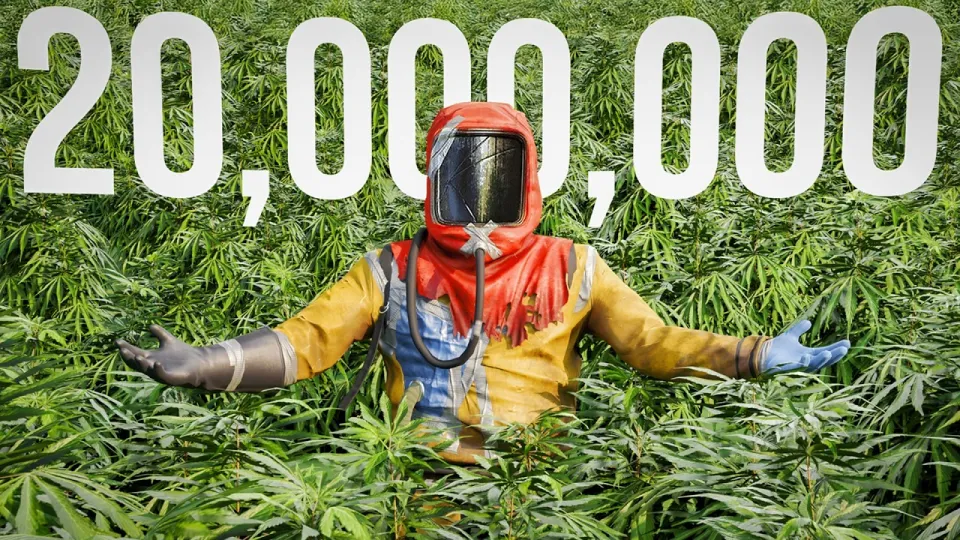
Video: I Became Rust's #1 Farmer...
Want articles like this for your own video to promote it on YouTube and Google? Order them through the Telegram bot @sat_sit_bot. Articles with your video embedded are written and posted by the bot itself — on popular topical sites (no ads). Free trial — 50 articles.
· based on the channel JTeles
Key takeaways
- JTeles started the wipe with 126,000 cloth and set a target of 20,000,000 cloth within 7 days.
- Viewers were invited onto the server to help build what was billed as the biggest cloth farm in Rust.
- A large Russian clan learned of the project and tried to stop it, producing PvP, raids, base defense and alliances.
- The compound grew so large that rendering it caused server lag.
- Clan members defended the base while JTeles was offline, a detail viewers singled out as the run's backbone.
Rust's cloth economy is usually a side hustle: a few hemp plants behind the base, a stack of cloth for bandages, maybe a sleeping bag or two. JTeles turned that side hustle into a server-wide campaign, starting a wipe with 126,000 cloth and chasing 20,000,000 cloth in seven days to claim the title of Rust's #1 farmer. The attempt, documented in the video "I Became Rust's #1 Farmer...", turned a peaceful harvesting project into raids, alliances and open war — and you can see the sponsored play session behind it through the War Thunder free-to-play link used in the video.
What the 20 million cloth challenge in Rust actually involved
The rules were simple and brutal: begin with 126,000 cloth already banked, then scale production until the stockpile hits 20,000,000 before the wipe ends. Seven days is not a long time for a number that size, so the plan depended on three things — land, labor and protection.
- A dedicated farm footprint. Instead of scattered hemp patches, the project called for one enormous growing compound, described as the biggest cloth farm built in Rust.
- Recruited labor. JTeles invited viewers onto the server to plant, harvest and process, turning a solo grind into a community operation.
- A defensive shell. A farm that size is a loot piñata, so walls, turrets and a standing guard were as important as the planters themselves.
Cloth in Rust comes from hemp fibers, and every planter box, every harvest cycle and every trip to a crafting bench eats time. Scaling from six figures to eight figures means multiplying planter count, fertilizer supply and player hours at the same time — which is exactly why the project needed a compound rather than a farm.
Why the biggest cloth farm in Rust became a war target
A giant base full of a high-demand resource does not stay secret. According to the video, a large Russian clan discovered what was being built and committed to shutting it down, which flipped the project from farming simulator to survival shooter. The result was a wipe full of the things Rust does best: skirmishes over farm routes, raids on the compound, base defense at odd hours, and alliances stitched together to survive the pressure.
The economics explain the aggression. Cloth feeds into low-grade fuel production through cloth and animal fat, and low-grade fuel powers furnaces, boats and vehicles — so a 20 million cloth stockpile is effectively a fuel refinery and a trade empire in one. For a clan, denying that stockpile is cheaper than competing with it.
How the farm scaled from 126,000 to eight figures
Getting to 20,000,000 cloth is a math problem before it is a PvP problem. The compound approach works because it concentrates three multipliers:
- Planter density. More planter boxes per square meter means more hemp per harvest cycle, and a compact layout shortens the walk between planting and collecting.
- Continuous cycles. Hemp does not wait for the farmer. A large enough planter count keeps production running around the clock, including while the owner sleeps.
- Processing on site. Turning fibers into cloth next to the garden removes hauling trips and keeps the stockpile centralized and countable.
That centralization has a cost. Viewers noticed the compound grew so massive that simply looking at it stressed the server — a real constraint in Rust, where huge bases with hundreds of deployables generate network and rendering load. Bigger is not automatically better; at some point the farm becomes its own lag spike.
The clan defense problem: holding a farm while offline
The most underrated part of any large-scale Rust project is what happens when the builder logs off. In this run, clanmates held the line while JTeles was away, defending the compound against raids and keeping production going. That detail drew heavy praise from viewers, and it is the difference between a solo stunt and an organized operation.
Practical lessons from that side of the wipe:
- Assign offline coverage. A farm worth millions is worth a night shift; someone has to be awake and geared when the raiders arrive.
- Build layered defenses. Outer walls buy time, turrets buy damage, and inner loot rooms buy a second chance.
- Keep alliances fed. Allies who receive cloth and fuel have a reason to show up when the alarm goes off.
- Expect the counter-raid. Success attracts attention, and attention in Rust arrives with rockets.
Questions Rust players ask about giant farming runs
Large projects like this one always spark the same debates in the community: is it worth the time, how do you keep it secret, and what happens to the server while you do it. Experienced farmers point out that cloth runs have been done at scale before — one player recalled hand-planting and hand-harvesting a 1,008-planter farm before quality-of-life updates existed, spending roughly three hours planting and three hours harvesting for about 17.4 million cloth, with heavy lag as the price. That history puts the 20 million target in perspective: the number is achievable, but only with automation-friendly layouts, a crew and tolerance for frame drops.
The other recurring question is motivation. Grinding cloth for a week is not normal gameplay, and the video leans into that absurdity — the joke about going outside for the first time since wipe is the natural endpoint of a project this obsessive.
All links from the JTeles video
- War Thunder free-to-play (PC and consoles): https://wtplay.link/jteles
- War Thunder mobile: https://wtm.game/jteles
- JTeles Discord: https://discord.gg/jteles
- JTeles on X/Twitter: https://twitter.com/xJTeles
- JTeles on TikTok: https://www.tiktok.com/@xjteles
Final thoughts on Rust's #1 farmer attempt
This is a farming video that behaves like a war documentary: 126,000 cloth becomes a 20 million target, a garden becomes a fortress, and a quiet resource grind becomes a server-wide conflict with a clan trying to bury it. The scale is what makes it work — a compound big enough to lag the server, defended by players who signed up to help a stranger hit an absurd number. JTeles is the author of the video breakdown, and the run stands as a template for how far organized Rust players can push a single resource in one wipe. If you want to see the sponsored game that helped fund the chaos, start with the War Thunder sign-up page and judge the farming for yourself.
Questions & answers
How much cloth did JTeles start with in the Rust challenge?
The run began with 126,000 cloth already collected, and the goal was to reach 20,000,000 cloth before the end of a single wipe. That is roughly a 158x increase, achieved over seven days with help from viewers invited onto the server.
Why did a clan try to stop the cloth farm?
A stockpile of 20 million cloth is enormously valuable — it feeds low-grade fuel production and trade — so a large Russian clan that learned about the project moved to shut it down. That turned the build into a cycle of raids, base defense and alliances rather than a pure farming grind.
Can one player realistically farm 20 million cloth in Rust?
Not alone in a week without extreme efficiency. Community farmers report that even a 1,008-planter setup took about three hours to plant and three hours to harvest by hand for roughly 17.4 million cloth, before automation updates. Reaching 20 million requires dense planter layouts, round-the-clock cycles and a crew.
What happens to a Rust server when a base gets too big?
Very large compounds with hundreds of deployables and planters increase network and rendering load, which shows up as lag when players look at the base. In this run the farm grew big enough to stress the server, a known trade-off of mega-base building.
Source: I Became Rust's #1 Farmer... · Markdown version